Author : Irfan Adi Yuwono
Cover and Text editor: Muhana Fawwaz Sausan
Assalamualaikum Warrahmatullahi Wabarakatuh. Hello HIMASIS friends!
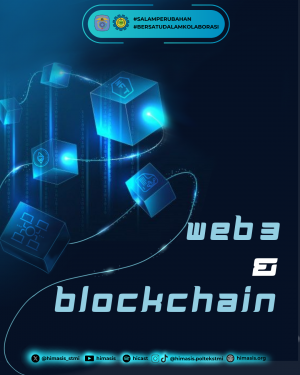
Welcome back to HIMASIS ARTICLE! In today’s edition, we’re diving into one of the most exciting evolutions in the digital world — Blockchain in Web 3.0. While blockchain is often associated with finance and cryptocurrencies, its role goes far beyond that. As the internet transitions from Web 2.0 to Web 3.0, blockchain emerges as a powerful enabler of decentralization, privacy, and user empowerment. Curious about how this groundbreaking technology is reshaping the web as we know it? Let’s explore how blockchain is driving the future of the internet.
The internet is evolving rapidly, moving from Web1.0, the era of static web pages, to Web2.0, where interactivity, social media, and user-generated content become the norm. This next generation of the internet promises to be more decentralized, secure, and user-centric. This article focuses on discussing the role of Blockchain in Web 3.0.
A. What is Web 3.0?
Web 3.0, often called the decentralized web, is the next phase of Internet evolution. Unlike Web 2.0, where centralized platforms like Google, Facebook, and Amazon control vast amounts of data and digital interactions, Web 3.0 aims to redistribute control to the users themselves.
1. Decentralization
2. Ownership and Data Privacy
3. Decentralized Autonomous Organizations (DAOs)
4. Trustless and Permissionless Systems
5. Interoperability
6. Semantic Web
Core Components of Web 3.0
Web 3.0 is built on several core components that work together to create a decentralized and user-centric online experience.
1. Decentralization: It means no single entity controls the network. Power is distributed among users rather than centralized entities.
2. Artificial Intelligence and Machine Learning: AI-powered algorithms for enhanced user experiences. These technologies play a significant role in Web 3.0, allowing systems to learn from data and make informed decisions.
3. Smart Contracts: Self-executing contracts with the terms of the agreement directly written into code.
4. Decentralized Applications (dApps): DApps are applications that run on decentralized networks, utilizing smart contracts to provide services directly to users without relying on central authorities.
5. Decentralized Finance (DeFi) Infrastructure : DeFi platforms offer financial services such as lending, borrowing, trading, and investing without traditional financial intermediaries.
6. Decentralized storage solutions : (like IPFS and Filecoin) distribute data across multiple nodes, instead of keeping data in one place controlled by a company, decentralized systems spread it across a network of computers.
B. What is Blockchain?
At the heart of Web 3.0 lies blockchain technology. Blockchain is a distributed ledger technology that records transactions across a network of computers in a way that ensures security, transparency, and immutability.
Blockchain is the backbone of Web 3.0, providing:
1. Security: Tamper-proof transactions and data storage.
2. Identity Verification: blockchain provides Secure and decentralized identity management.
3. Transparency: All transactions are recorded publicly.
4. Decentralization: This means No single entity controls the network.
Blockchain&singlequote;s Role in Web 3.0
1. Decentralization: The Foundation of Web3
Web3 is built on decentralized networks, eliminating the need for centralized authorities and intermediaries. Decentralized Autonomous Organizations (DAOs) leverage blockchain to enable community-driven decision-making, fostering a more democratic and inclusive digital environment. In practical terms, blockchain decentralizes aspects of the web:
- Decentralized Finance (Defi)
- Decentralized Storage
- Decentralized Identities.
2. Digital Ownership and NFTs
Web 3.0 uses tokens to incentivize participation, create new business models, and enable decentralized governance. Reporting real-world assets as digital tokens on a blockchain facilitates fractional ownership and efficient trading.
The implications of NFTs in Web3.0 are profound:
- Digital Ownership
- Art and Creativity
- Interoperability in the Metaverse
3. Decentralized Governance and DAOs
Blockchain enables decentralized governance, allowing communities to make decisions and vote on proposals transparently and securely. DAOs operate without a central leadership, and every member has a say in the governance process.
The impact of DAOs in Web3 is significant:
- Democratized Decision-Making
- Innovative Business Models
- Enhanced Transparency and Accountability
4. Trustless Transactions and Smart Contracts
Smart contracts, self-executing contracts with the terms of the agreement written directly into code, are a key component of Web3. Smart contracts automatically enforce the terms of a contract when predefined conditions are met, without the need for intermediaries.
In Web3, smart contracts are used in various applications:
- Decentralized Finance (DeFi)
- Supply Chain Management
- Automated Legal Agreements
5. Security and Privacy in Web3
Blockchain&singlequote;s decentralized and immutable nature ensures that data and transactions are secure and tamper-proof. For example, in a decentralized social network built on blockchain, users could control who has access to their posts and personal information. This contrasts with centralized platforms like Facebook, where user data is often shared with advertisers and other third parties without explicit consent.
- Enhanced Security through Decentralization
- Increased Complexity
- Auditing & Verification
C. Application and Use Cases
Supply Chain Management: It Tracks product movement and provenance, ensuring transparency and authenticity. Blockchain can be used to create transparent and traceable supply chains, ensuring that products are sourced ethically and sustainably.
Non-Fungible Tokens (NFTs): These are unique digital assets for art, collectibles, and more. NFTs are transforming industries like art, gaming, and entertainment by providing new ways to monetize and trade digital content.
Decentralized Identity: Blockchain enables the creation of decentralized identity systems where users have full control over their digital identities. This reduces the risk of identity theft and fraud.
Decentralized Finance (DeFi): DeFi refers to a new financial system built on blockchain technology that operates without intermediaries like banks. DeFi platforms leverage blockchain to offer financial services like lending, borrowing, trading, and insurance without relying on traditional financial institutions.
Decentralized Marketplaces: OpenBazaar enables peer-to-peer buying and selling of goods using cryptocurrencies. Platforms like Braintrust connect freelancers with clients without intermediary fees.
Digital Identity and Self-Sovereign Identity: uPort and Sovrin provide secure, decentralized identity verification. SSI solutions streamline certification and credential verification processes.
Benefits of Blockchain in Web 3.0
Blockchain brings numerous benefits to Web 3.0, enhancing its functionality, security, and user experience. Some of the key benefits include:
1. Enhanced Security
2. Transparency and Trust
3. Greater User Control
4. New Economic Opportunities
5. Enhanced Privacy
6. Improved Efficiency
Case Studies
Case Study : Ethereum and DeFi
A leading blockchain platform supporting a vast ecosystem of DApps and DeFi applications. By enabling the development of smart contracts and dApps, Ethereum has become the foundation for a wide range of DeFi platforms, including Uniswap, Aave, and Compound. Through its open-source protocols, Ethereum has enabled the creation of numerous DeFi applications that offer financial services without the need for traditional banks
Conclusion
In conclusion, blockchain plays a vital role in Web3, enabling decentralized data storage, secure transactions, smart contracts, identity verification, and decentralized governance. With blockchain, Web3 promises to revolutionize the way we connect online, making it more equitable, private, and user-centric. As blockchain continues to evolve, we can expect a more secure, open, and inclusive internet, where users have the power to shape their online experiences. In short, blockchain is the key to unlocking the full potential of the internet, creating a more open, secure, and fair digital future.
(Source : geeksforgeeks)
“ Blockchain is more than just hype “
it’s the engine behind a new era of the internet: one that values decentralization, privacy, and user empowerment. From NFTs and smart contracts to DeFi and DAOs, Web 3.0 is reshaping how we connect, create, and collaborate online.
As we step into this future, blockchain stands as the foundation of a more secure, transparent, and democratic digital world — where you hold the power.
Thus HIMASIS ARTICLE this time. Hopefully the article about Blockchain & Web 3 can provide new insights and be useful for all readers.
Thank you for taking the time to read this article. Don&singlequote;t forget to continue following HIMASIS ARTICLE to get other interesting information and discussions in the world of technology and information systems!
See you in the next article!
#SalamPerubahan
#BersatuDalamKolaborasi
Komentar (0)
Tinggalkan Komentar